By Alex Samoylovich
What is a smart building in multifamily?
A smart building is a multifamily asset where core building systems are connected, monitored, and integrated so operators can improve reliability, reduce downtime, optimize costs, and strengthen resident outcomes with clear ownership and auditability.
What is smart city integration?
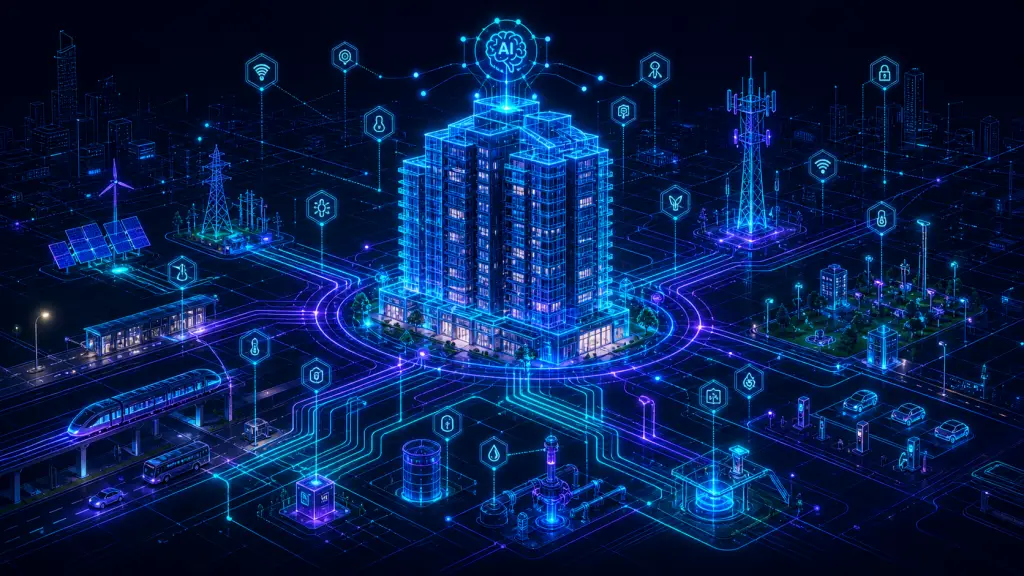
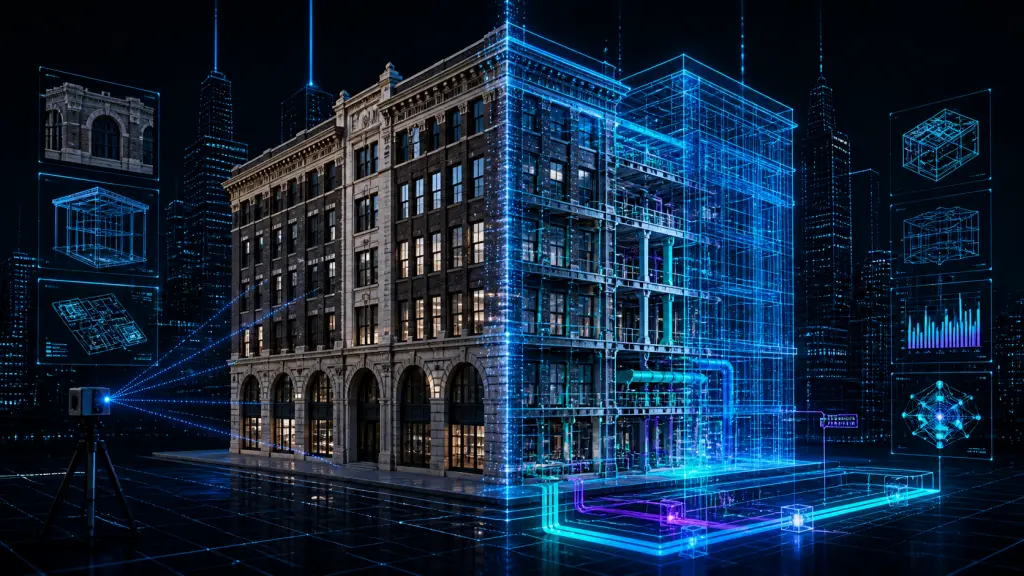
Smart city integration connects building data and controls to external infrastructure systems such as utilities, mobility networks, and public safety services, using privacy-first data sharing and reliability controls.
What should operators do first?
Start by defining systems of record and operational ownership, then implement a monitored integration layer, and only then expand into high-value use cases such as energy optimization, access reliability, and incident response workflows.
Why smart building integration is an operator strategy, not a device strategy
Smart buildings are often marketed as a collection of devices. Operators experience them as a set of workflows. The difference matters because device-heavy deployments can increase fragility when ownership, integrations, and controls are unclear.
In multifamily, the best smart building programs have three characteristics:
- Reliability improves. Residents see fewer outages and fewer repeat issues.
- Decisions become explainable. Teams understand why the system flagged a risk or recommended an action.
- Governance is explicit. Privacy, access, and change control are treated as operational requirements, not legal fine print.
The strategic objective is not to be “more connected.” It is to be more reliable at scale while reducing friction across the resident lifecycle.
The operator value case
Reliability is the KPI that makes everything else real
If a connected system fails during a move-in, locks residents out, or creates false alarms, it becomes a reputational risk. Reliability must be measured with service-level objectives (SLOs) like uptime, latency, and recovery time. Smart building programs that do not track SLOs are not programs. They are experiments.
Cost and energy performance are operational levers, not reporting claims
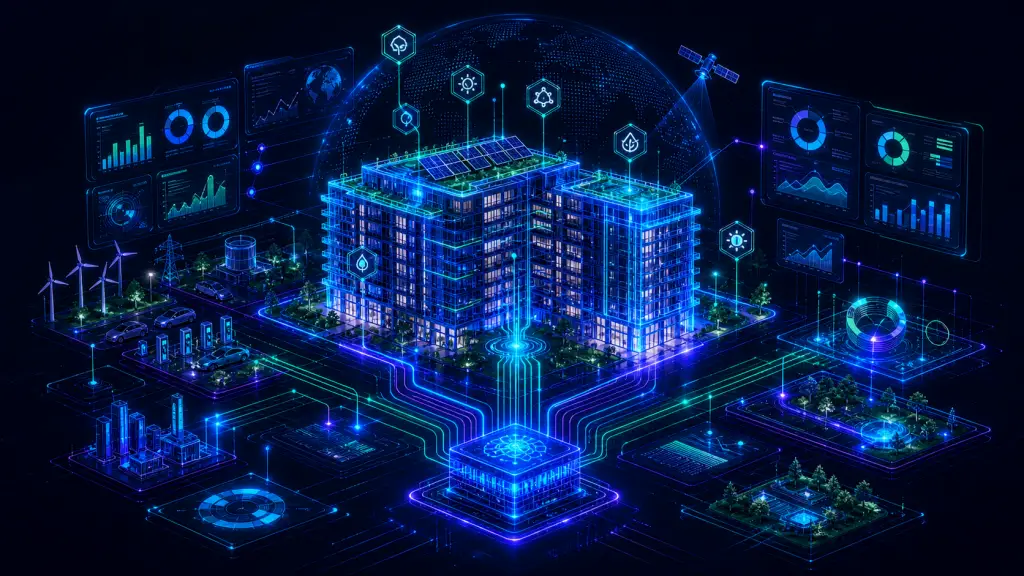
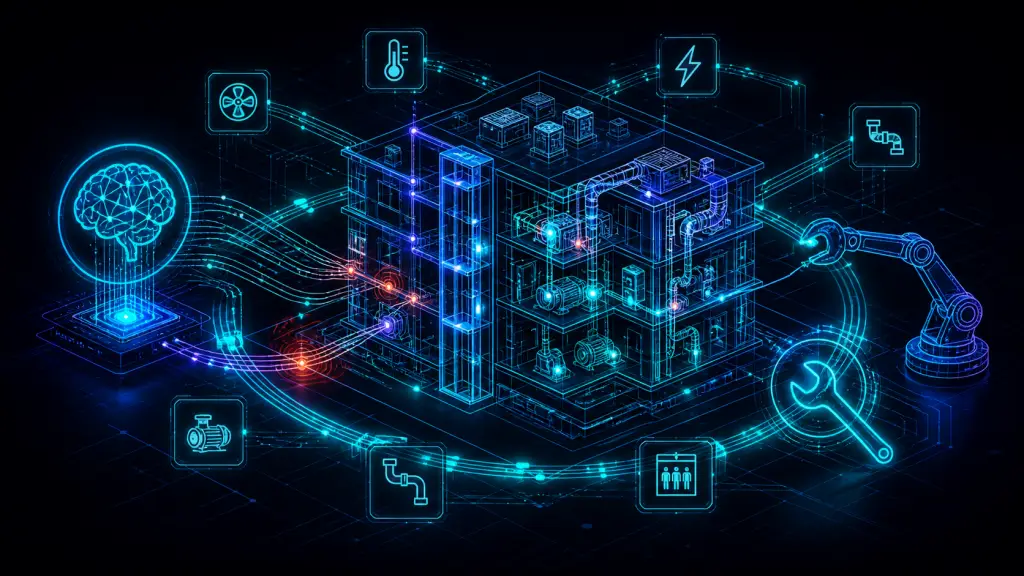
Connectivity enables optimization only when the underlying data is complete and consistent. Energy, water, and equipment telemetry become useful when they drive interventions: setpoint tuning, runtime reduction, leak triage, and preventive maintenance scheduling.
Safety improves when data becomes actionable and auditable
In multifamily, safety is not only the incident. It is the documentation. Integrated alarms, access events, and incident workflows can reduce response time and improve audit trails. That requires careful controls around who can view, export, and retain sensitive data.
Resident experience improves when systems reduce friction
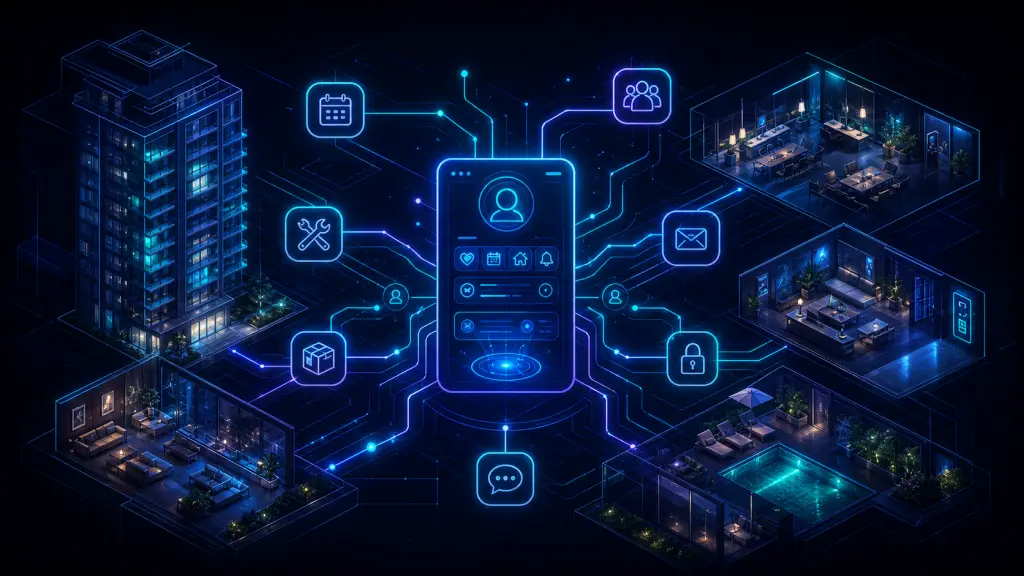
Smart buildings should make routine tasks easier: building entry, package pickup, visitor access, parking, EV charging, and service updates. The resident experience improves when the systems are consistent and support self-service without breaking.
Integration domains that matter in multifamily
Smart building integration becomes valuable when it connects high-frequency operational systems to external infrastructure responsibly. Start with domains where the data is already available or the ROI is direct.
Energy and grid interaction
Practical operator use cases include:
- Submetering and usage analytics (visibility before optimization)
- Peak demand forecasting (cost control)
- Demand response participation where applicable (incentive capture with guardrails)
- HVAC optimization tied to occupancy patterns (comfort and efficiency)
- Generator testing and readiness monitoring (risk reduction)
Water integrity and loss prevention
Water is a controllable expense and a damage multiplier. Integration patterns include:
- Leak detection signals routed into service workflows
- Abnormal consumption alerts tied to unit and riser mapping
- Auto-generated incident logs with timestamps and acknowledgments
Mobility, access, and curb management
Where smart building meets smart city most visibly:
- EV charging load management to avoid peak penalties
- Parking availability and credential lifecycle integration
- Visitor access and delivery workflows that reduce lobby friction
- Intercom and access logs aligned to operational ownership
Safety and incident workflows
The objective is not surveillance. It is response quality:
- Alarm event routing into incident workflows
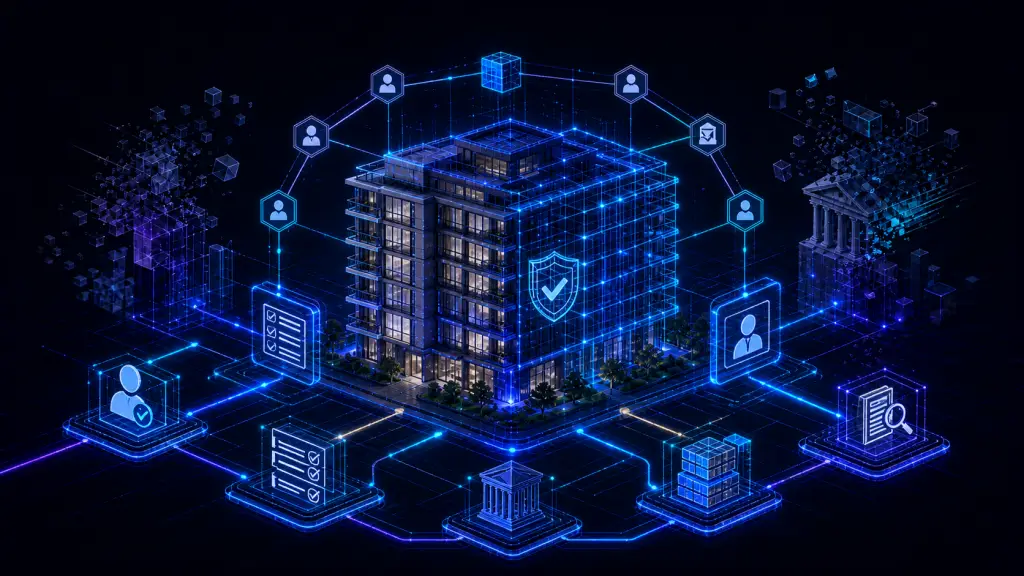
- Access event audit trails with role-based viewing
- Emergency communications templates and escalation paths
- Device health monitoring (a broken camera is an operational issue)
The architecture that prevents fragile “smart buildings”
A smart building program fails for predictable reasons: unclear systems of record, brittle sync, no monitoring, and vendor sprawl. The fix is not more features. It is better architecture.
Define systems of record (SoR) and operational owners
Every domain needs an authoritative source and an accountable owner. Examples:
- Resident identity and lease status: PMS or leasing system of record
- Access credentials and permissions: access control SoR with audited admin rights
- Work orders and service status: maintenance/work order platform SoR
- Asset registry and equipment lifecycle: asset management registry SoR
- Utility data and meter truth: metering platform SoR, reconciled to bills
A unified tech stack philosophy does not mean one vendor. It means explicit authority, consistent identifiers, and reliable reconciliation.
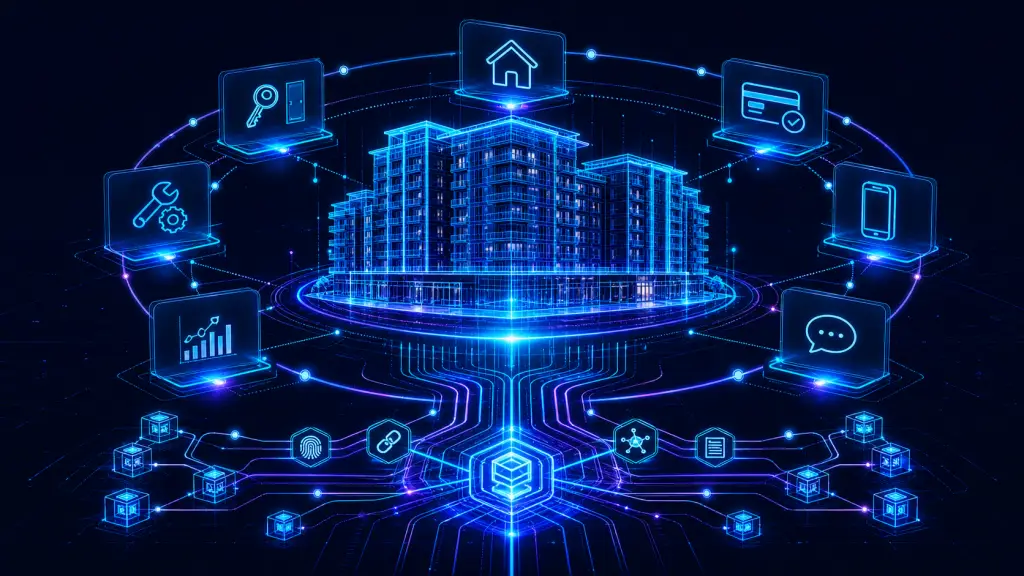
Use a monitored integration layer (not point-to-point chaos)
Operators should avoid custom one-off integrations that only one person understands. A sustainable integration layer should support:
- Standard APIs and event streams
- Versioned contracts (schema changes do not break production)
- Retry and idempotency patterns
- Dead-letter queues and exception handling
- Environment separation (dev, staging, production)
Build an “integration event catalog” for building operations
A practical way to remove ambiguity is to define the events that matter and who owns them. Example event families:
- Identity events: resident_created, resident_verified, lease_activated, lease_ended
- Access events: credential_issued, credential_revoked, entry_denied, device_offline
- Asset events: equipment_registered, fault_code_detected, runtime_threshold_exceeded
- Service events: work_order_created, work_order_assigned, work_order_completed
- Safety events: alarm_triggered, incident_opened, incident_closed
This catalog becomes the backbone for monitoring, auditing, and continuous improvement.
Observability is not optional
If you cannot see it, you cannot run it. Minimum observability requirements:
- Integration uptime and latency dashboards
- Failure alerts with clear routing and severity
- Traceability across systems (correlation IDs)
- Change history for connectors and configurations
- On-call ownership, even if outsourced
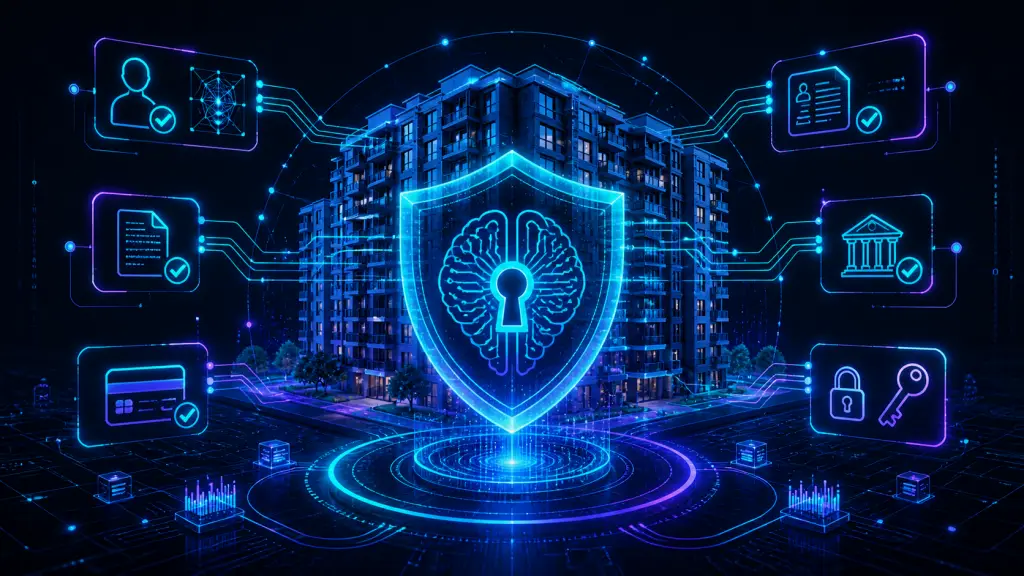
Privacy-first controls for connected assets
Smart buildings produce sensitive operational and behavioral data. Privacy-first design reduces risk while preserving useful functionality.
Data minimization and purpose limitation
Collect what is needed for the use case. Avoid storing sensitive data “just in case.” If a use case can be solved with aggregated or masked data, prefer that.
Role-based access control (RBAC) and least privilege
Separate roles with explicit permissions:
- Onsite operations (service and access support)
- Property management leadership (approvals and audits)
- Vendors (limited, time-bound access)
- Security administrators (restricted, logged access)
Enforce MFA for admin roles and maintain an access review cadence.
Retention and audit policy aligned to risk
Define how long you keep logs and why. Retention should consider:
- Incident response needs
- Vendor dispute resolution
- Regulatory and contractual requirements
- Storage and exposure minimization
Vendor access is a core risk surface
Require contract-level clarity on:
- Data ownership and reuse restrictions
- Sub-processor disclosure
- Security controls and breach notification
- Export and deletion capabilities
- Audit support and log availability
Governance and operating model
The most important smart building question is: who is accountable when something breaks?
RACI for smart building operations
A practical baseline:
- Responsible: Property operations lead for day-to-day workflows
- Accountable: Regional ops leader for outcomes and escalations
- Consulted: IT/security for access controls and change management
- Informed: Ownership/asset management for KPI reporting
Change control and release discipline
Connected assets fail when changes are untracked. Implement:
- Release notes for integration changes
- Approval workflows for high-risk modifications
- Rollback procedures for connectors and configurations
- Scheduled maintenance windows for building-critical systems
Incident playbooks and tabletop exercises
Run smart buildings like production systems:
- Incident severity definitions
- Escalation matrix (who gets called, when)
- Resident communication templates
- Post-incident review cadence (root cause, prevention)
A practical implementation plan (90 days)
Weeks 1 to 3 – Baseline and SoR mapping
- Inventory building systems, vendors, and interfaces
- Define systems of record by domain
- Establish stable identifiers (resident, unit, device, asset)
- Set SLOs for building-critical systems
- Stand up monitoring and alert routing
Weeks 4 to 7 – Implement 3 high-value use cases
Pick three that are measurable and operationally bounded:
- Access reliability: credential lifecycle plus device health monitoring
- Energy visibility: submeter integrity plus peak alerts
- Incident workflow: alarm-to-ticket routing with audit trails
Weeks 8 to 13 – Hardening and governance
- Add retries, idempotency, and dead-letter handling
- Implement reconciliation checks for key domains
- Formalize vendor access controls and access reviews
- Run one tabletop exercise for a high-impact outage scenario
- Publish a KPI dashboard and operational cadence
KPIs that prove the system is working
Track outcomes that both operations and ownership recognize:
- Integration uptime, latency, and incident frequency
- Access failure rate and time-to-restore
- Energy peak reduction and energy intensity trend
- Water anomaly response time and loss reduction
- Work order cycle time for building-system incidents
- Resident friction indicators (complaints, escalations, service CSAT)
Audit readiness indicators (log completeness, change traceability)