By Alex Samoylovich
Chicago is a proving ground for adaptive reuse. The upside is clear: location, embedded infrastructure, neighborhood identity, and faster paths to activation than ground-up in many corridors. The risk is also clear: legacy conditions, incomplete records, landmark constraints, deferred maintenance, and capital stacks that punish surprises.
Digital twin technology helps reduce those surprises – not by adding another shiny model, but by creating a disciplined, living representation of the asset that improves decisions across design, construction, and operations.
This guide is written for operators. It focuses on practical use cases, minimal viable architecture, governance controls, and what to measure so a digital twin becomes an operating advantage – not a one-time visualization expense.
What is a digital twin in real estate?
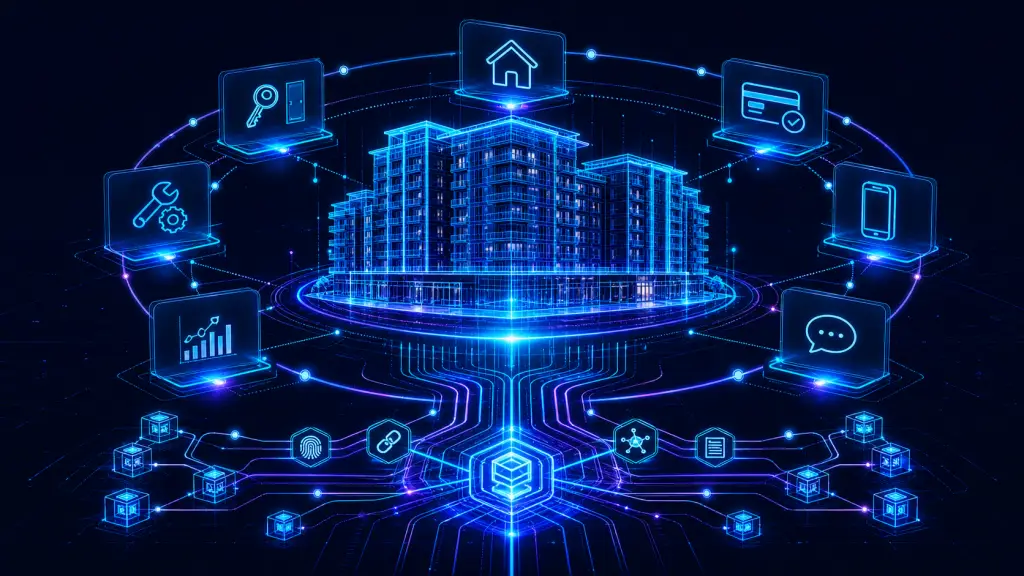
A real estate digital twin is a continuously updated digital representation of a building that links physical conditions (space, systems, performance) to operational data (work orders, energy, occupancy, capital plans). Unlike a static BIM model, a digital twin is designed to support ongoing decisions with measurable outcomes.
Why digital twins matter more in adaptive reuse
Adaptive reuse is variance-heavy. That variance is where returns get won or lost. Digital twins reduce variance by making conditions observable earlier and operations measurable later.
Where variance shows up in Chicago adaptive reuse
- Legacy documentation gaps: drawings that do not match field conditions.
- MEP complexity: constrained shafts, mixed vintages, nonstandard routing.
- Envelope and energy: unknown thermal performance, infiltration, and retrofit tradeoffs.
- Structural and historic constraints: limited intervention options, sequencing risk.
- Coordination density: more stakeholders, more approvals, more interfaces.
- Commissioning drift: design intent does not fully translate into operating reality.
A digital twin does not eliminate these issues. It makes them explicit sooner, and it creates a system to manage them continuously.
The digital twin maturity model (BIM to operations)
Most teams try to buy a “digital twin” and end up with a model that dies at handover. Operators win when they treat the twin as a staged capability.
Maturity model
|
Stage
|
What it is
|
Primary value
|
Owner
|
|
1. Visual twin
|
3D model for communication
|
Alignment, stakeholder clarity
|
Development and design
|
|
2. Verified twin
|
Model validated against field reality
|
Reduced change orders
|
Construction and QA/QC
|
|
3. System twin
|
MEP systems mapped with attributes
|
Commissioning and reliability
|
Construction + facilities
|
|
4. Operational twin
|
Linked to CMMS, BMS, meters
|
Faster decisions, lower downtime
|
Operations
|
|
5. Portfolio twin
|
Standardized across assets
|
Benchmarking, governance, capital planning
|
Asset management
|
Operator guidance: treat Stage 3 as the non-negotiable handover target. Stages 4 and 5 are where NOI gets protected.
Core operator use cases across the lifecycle
1. Pre-acquisition and diligence (before the capital stack hardens)
- Rapid reality capture (laser scan, photogrammetry) to establish baseline geometry
- Condition variance map: knowns, unknowns, and “must-verify” zones
- Early MEP feasibility: shafts, electrical capacity, HVAC pathways
- Energy retrofit scenarios: ROI sensitivity to envelope and equipment options
- Permitting and phasing constraints captured as requirements, not assumptions
Outcome focus
- Fewer late scope pivots
- Better contingency discipline
- Faster design-to-budget convergence
2. Design development and coordination (where rework is born)
- Clash detection that reflects as-built conditions, not ideal drawings
- Design option testing: cost, schedule, carbon, and maintainability
- Constructability checks: access, sequencing, and temporary works
- Asset register creation: equipment, warranties, expected life, spares
Operator requirement
- Every major system decision includes maintainability and replacement pathway documentation.
3. Construction and commissioning (where the twin earns trust)
- Field verification loops: model updates tied to inspection evidence
- Commissioning tracked against system performance thresholds
- Submittals and O&M manuals structured to feed the asset register
- Handover acceptance criteria tied to data completeness, not just punch list closure
Non-negotiable
- No “model-only” handover. Require equipment attributes, locations, and operational setpoints.
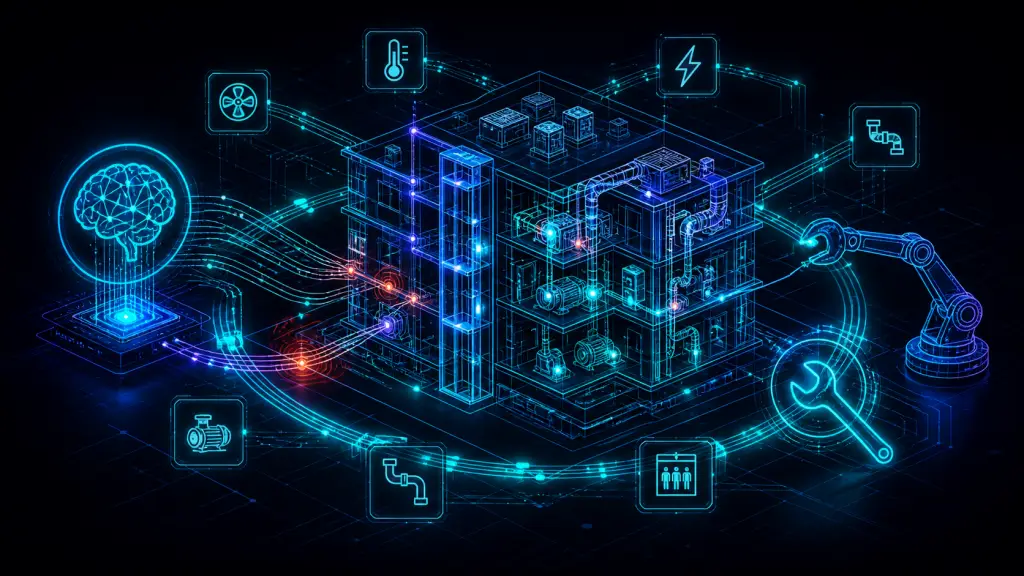
4. Operations (where NOI is protected)
- Faster service triage using spatial context and system dependencies
- Predictive maintenance models that incorporate run-hours and environment
- Energy optimization: detecting drift, overrides, and inefficient control loops
- Turn management: unit readiness forecasting and bottleneck visibility
Operator outcomes
- Reduced downtime and repeat work
- Improved make-ready velocity
- Lower energy spend volatility
5. Capital planning and refinancing readiness (where narrative matters)
- Evidence-backed capex plans (condition + performance, not opinion)
- Retrofit ROI documentation for lenders and insurers
- ESG reporting fidelity grounded in meter-level attribution
Outcome focus
- Stronger credibility in capital markets
- Better risk story: disciplined controls, measurable performance
Architecture that works: minimal viable digital twin stack
Digital twins fail when they become a platform collection. Start with a thin, enforceable architecture that can grow.
Minimum viable components
- Reality capture baseline
- Laser scan or equivalent for geometry truth
- Structured asset register
- Equipment list, location, attributes, warranty, lifecycle
- System-of-record integrations
- CMMS (work orders)
- BMS (controls and setpoints)
- Meter data (energy and water)
- Optional: PMS and resident experience for service demand patterns
- Data layer
- Common naming, ID strategy, and change control
- Governance
- Roles, permissions, audit trails, and update cadence
Operator rule: create one ID spine
Every asset, space, and system needs a stable identifier that persists from design through operations. This is the spine that prevents “model drift” and integration chaos.
Chicago case narrative module (illustrative)
A Chicago operator acquires a [X]-year-old building for adaptive reuse into [X] residential units with ground-floor retail. Drawings are partial. Electrical service is assumed to be adequate. Early design leans on a mixed VRF approach.
During selective demo, field conditions reveal:
- Shaft conflicts that force rerouting
- Structural constraints affecting unit layouts
- Unexpected envelope issues driving energy loss
A staged digital twin approach changes the trajectory:
- Reality capture establishes geometry truth early
- Critical systems are modeled and verified before final MEP lock
- Commissioning data and setpoints are captured as structured records
- Operations inherits a living asset register tied to work orders and meters
The measurable impact is not aesthetic. It is variance reduction:
- Fewer late change orders
- Faster commissioning stabilization
- Lower first-year maintenance noise
- Better documentation quality for capital partners
Governance: human-in-the-loop controls for digital twins
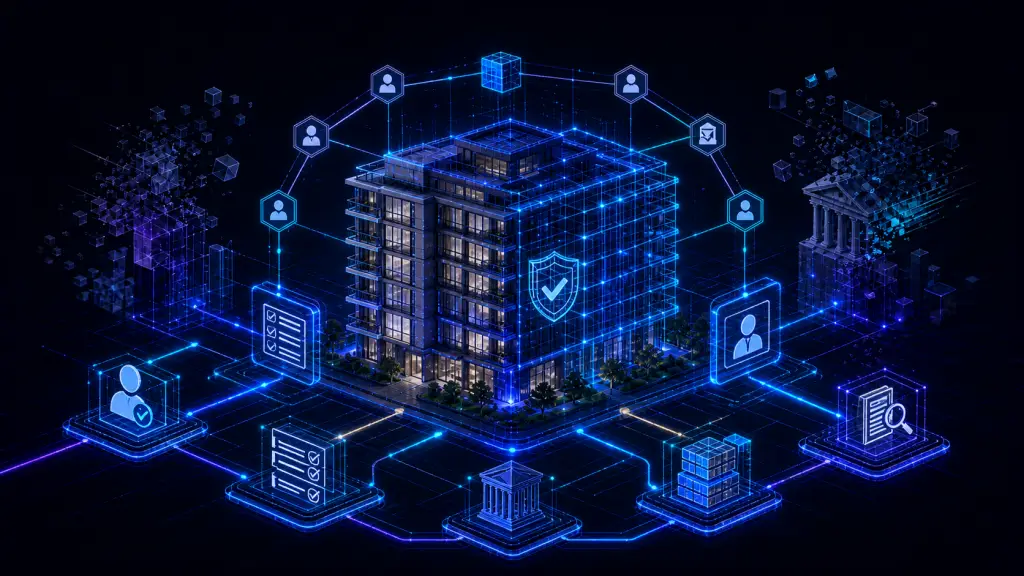
Digital twins are operational infrastructure. Treat them like a controlled system.
Control domains
- Data ownership: who approves changes to geometry, assets, and attributes
- Model risk: where simulation is used for decisions, require assumptions and versioning
- Cybersecurity: access controls, least privilege, vendor risk review
- Privacy: avoid unnecessary personal data; define retention and access boundaries
- Auditability: log changes, approvals, and source evidence
- Exception handling: define “break glass” rules when urgent operational overrides occur
Human-in-the-loop standard
Use the twin to recommend actions, not to silently execute them. Require approvals for:
- Major setpoint changes
- Preventive maintenance schedule changes
- Capex trigger thresholds
- Resident-impacting operational decisions
Implementation roadmap: 90 days to a working twin
Days 0-30: Define, capture, and normalize
- Select 3-5 operator-critical use cases (do not exceed)
- Complete reality capture baseline for high-variance zones
- Create naming conventions and ID strategy
- Stand up asset register schema (even if incomplete)
Days 31-60: Integrate the systems of record
- Connect CMMS and meter data first
- Map BMS points that matter (not every point)
- Define event taxonomy (what is an incident vs a work order vs a recurring issue)
- Establish permissions and change approval workflow
Days 61-90: Operationalize and measure
- Run weekly “twin review” with facilities and asset management
- Implement first analytics: drift, repeat work, downtime, energy anomalies
- Document the handover and update cadence
- Lock KPI baseline and targets
Readiness checklist
Use this as a go/no-go gate before committing to a full implementation.
Strategy and scope
- Defined operator use cases with owners and KPIs
- Clear boundary of what is in-scope (spaces, systems, assets)
- Budget and timeline aligned to staged maturity
Data and systems
- CMMS data quality acceptable (asset naming, locations, closures)
- Meter coverage adequate for attribution
- BMS access and point mapping feasible
- Asset register structure defined and governed
Governance and risk
- Vendor risk review completed (security, permissions, data rights)
- Update cadence and change control defined
- Audit trails enabled
- Privacy boundaries documented
Delivery and adoption
- Field verification plan exists (not just design intent)
- Commissioning data will be captured in structured form
- Ops team trained with workflows, not demos
- “Single ID spine” enforced across systems
KPI set: what to measure to prove value
Track a small set of outcomes that map directly to NOI protection.
Reliability and maintenance
- Work order repeat rate
- Mean time to repair (MTTR)
- Downtime hours for critical systems
- Preventive maintenance compliance
Energy and performance
- Energy use intensity trend (normalized)
- Override and drift frequency in BMS
- After-hours consumption variance
Operations and resident impact
- Service request cycle time
- First-time fix rate
- Turn time variance
Asset management
- Capex forecast accuracy vs actual
- Unplanned capex events per quarter
Executive takeaway
In Chicago adaptive reuse, digital twins are not a visualization strategy. They are a variance management strategy. The teams that win are the teams that:
- verify reality early,
- preserve data through handover,
- link the twin to the systems that drive work,
- and govern it like operational infrastructure.